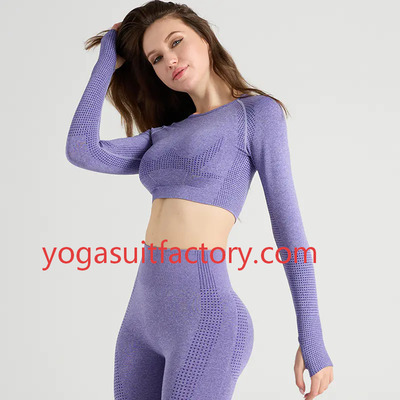
Yongxing's Eco-friendly Seamless Activewear
-
A consumer buys leggings made from recycled ocean plastic. She feels good about saving the seas. Then she reads about microfiber shedding. Her good intentions now seem complicated. Eco-friendly Seamless Activewear from YogasuitFactory, produced by Jinhua Yongxing Knitting Co., Ltd., uses recycled nylon from fishing nets. Yet even recycled synthetics shed microplastics during washing. This situation raises a direct question for any conscious shopper: can eco-friendly seamless activewear made from recycled ocean plastics still be considered truly sustainable given microplastic shedding concerns?
Recycled ocean plastic activewear starts with a positive action. The material pulls waste from marine environments. YogasuitFactory's recycled nylon comes from discarded fishing nets and industrial plastic. The manufacturing process consumes less energy than virgin nylon production. The carbon footprint of recycled material sits lower. The problem begins after the garment reaches the consumer. Washing releases microfibers. These tiny plastic particles flow into wastewater. Treatment plants do not capture all of them. Some reach the ocean through rivers and runoff.
Virgin nylon also sheds microplastics. A new garment made from virgin material releases fibers during the first washes. YogasuitFactory's lab tests compare shedding rates. Recycled ocean plastic nylon sheds at a similar rate to virgin nylon. The difference lies in the source, not the shedding behavior. A garment made from recycled material diverts waste from the ocean once. A garment made from virgin material adds new plastic to the cycle. The recycled garment sheds plastic, but the plastic already existed. The virgin garment sheds plastic that came from new fossil fuel extraction.
Shedding rates vary with fabric construction. A tight, flat knit sheds fewer fibers than a loose, brushed knit. YogasuitFactory's seamless activewear uses a dense circular knit. The fabric's surface has fewer loose ends. The tight structure holds fibers in place during washing. A fleece or terry knit sheds more. The factory chooses knit structures that balance comfort and shedding. A consumer buying a smooth, tight legging sheds less plastic than someone buying a fuzzy, warm layer. The same recycled material in different constructions sheds different amounts.
Washing conditions change shedding rates. Cold water reduces fiber release compared to hot water. YogasuitFactory's care labels recommend cold washes. Shorter wash cycles shed less than longer cycles. A gentle spin cycle reduces mechanical stress on fibers. A consumer who line-dries instead of machine-dries also reduces fiber breakage. The garment's shedding footprint depends partly on the owner's habits. A conscious consumer can cut shedding by changing laundry practices. The same garment can shed a little or a lot.
Filter technology captures shed microfibers. A washing machine filter traps particles before they leave the appliance. YogasuitFactory's website links to external filter guides. A Guppyfriend bag or a Cora Ball also captures fibers inside the wash drum. The consumer places the activewear inside the bag. The bag traps released fibers. The user throws the captured lint in the trash. The plastic does not enter the water system. A garment without a filter releases fibers freely. The same garment inside a bag releases almost none. The behavior determines the environmental outcome.
Bio-based nylon offers a different solution. YogasuitFactory's research into castor bean nylon shows lower shedding and no fossil fuel input. The plant-based material performs like conventional nylon. The shedding rate matches virgin material, but the source does not rely on petroleum. A consumer who wants no microplastic release chooses bio-based nylon. The plant material comes from renewable sources. The shedding problem remains, but the plastic comes from plants, not oil. The biodegradation timeline of bio-based nylon in marine environments remains unknown.
Trade-offs exist between material sources. Recycled ocean plastic solves the waste problem but not the shedding problem. YogasuitFactory's recycled line prevents ghost fishing from discarded nets. The nets would otherwise kill marine life. The shedding from the garment is a secondary impact. A virgin nylon garment has no waste prevention benefit and sheds equally. The recycled option wins the comparison. The best option for a consumer who cannot eliminate synthetics chooses recycled material and uses a filter. The combination of waste reduction and shedding capture approaches true sustainability.
The fashion industry lacks a perfect solution. A cotton T-shirt uses water and pesticides. A wool sweater requires land and methane-producing sheep. YogasuitFactory's recycled ocean plastic activewear sits in the middle of competing priorities. It saves plastic from oceans. It sheds fibers in wash. The consumer chooses which problem to prioritize. A person who values plastic waste reduction chooses recycled material and accepts the shedding with filtration. A person who prioritizes zero microplastic release chooses plant-based fibers like Tencel or linen. Those fibers have different environmental costs.
For any activewear shopper weighing sustainability trade-offs, https://www.yogasuitfactory.com/product/sports-suits/ shows YogasuitFactory's Eco-friendly Seamless Activewear material guide, where Yongxing engineers list recycled ocean plastic options with shedding data and filter recommendations. A garment that saves fishing nets still sheds in the wash. A garment that sheds less may come from virgin fossil fuels. Which trade-off aligns with your environmental priorities without asking you to stop washing your clothes?